
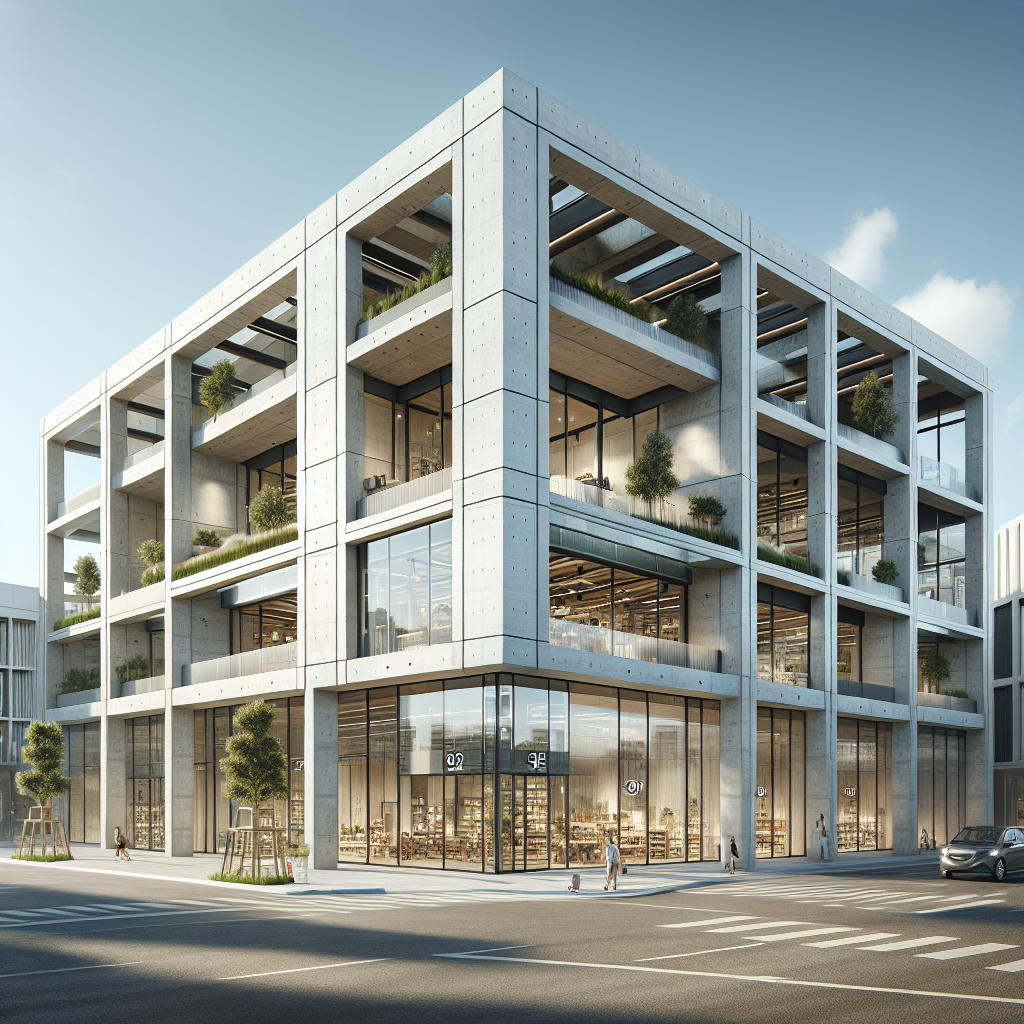
Anchor Tenants and Their Role in Commercial Centers: Stability, Occupancy, and Long-Term Value in the Basel Region
In the Basel region, commercial real estate performance is often determined less by short-term market sentiment and more by structural drivers: accessibility, tenant quality, and the ability of a property to remain relevant through economic cycles. For business owners, corporate tenants, investors, and public-sector decision-makers, the question is increasingly pragmatic: which assets create durable demand and predictable operating conditions?
K7 Center in Bubendorf sits within this regional logic. Bubendorf and the wider Basel-Landschaft area benefit from proximity to Basel’s economic base while offering a distinct cost and space profile for companies that want professional infrastructure without being tied to core-city constraints. In that context, the role of anchor tenants is not only a retail topic; it is a broader commercial-center principle that affects occupancy, credibility, and resilience across mixed-use and multi-tenant properties.
To understand why anchor tenants matter, and how they influence a commercial property in Bubendorf or a broader retail commercial hub, it is helpful to use a disciplined definition and then translate it into practical implications for the Basel region.
What is an anchor tenant, and why does the concept matter?
An anchor tenant is typically the largest tenant in a commercial center by leased area, or the tenant that occupies a substantial share of the property and materially influences the center’s economics. Importantly, anchor tenants often view the location as strategically important and are therefore more likely to sign long-term leases, creating stability for owners and other tenants. This is a widely used definition in commercial real estate and investment analysis, and is summarized clearly by First National Realty Partners in their investor guide: an anchor tenant is the largest tenant by square footage, often recognizable, and intended to provide confidence and draw demand to the center (FNRP: What is an Anchor Tenant?).
In classic retail formats, the anchor role is often played by grocery stores, big-box stores, or department stores. In strip centers and power centers, for example, anchors are frequently big-box or grocery tenants; in malls, department stores have historically filled that function (CommercialRealEstate.Loans: Anchor Tenants). However, the underlying principle is broader: an anchor tenant is a stabilizing force in a multi-tenant environment because it contributes scale, predictability, and perceived legitimacy.
Four core impacts: stability, traffic, credibility, occupancy
Research-based CRE commentary typically groups the anchor tenant’s value into four areas. First, stability: anchors tend to sign long-term leases that represent a meaningful share of rental income (FNRP). Second, traffic: in retail settings, anchors drive footfall, which supports smaller tenants. Third, credibility: the presence of a well-known or institutionally reliable tenant can make lenders and other tenants more comfortable. Fourth, occupancy: a large anchor directly supports high occupancy—yet it also introduces concentration risk if it vacates (FNRP).
For the Basel region, these mechanisms translate into a simple reality: properties with a strong anchor strategy tend to hold tenant demand more effectively, particularly when economic conditions tighten and decision-makers become more risk-sensitive.
Anchor tenants are evolving: from department stores to mixed-use anchors
Across mature markets, traditional department store anchors have lost some of their former dominance, which has pushed many developers and owners to reconsider what “anchoring” means. Some centers now look to alternative anchors such as niche brands or gyms; others emphasize mixed-use programming and public space as part of the retention and visitation strategy (CommercialRealEstate.Loans).
Another important data point is that grocery remains a particularly strong anchoring category because it represents necessity-based demand. In a shopping complex context, Ariadne’s analysis suggests that grocery stores are the primary footfall generators among anchor types, representing a large share of anchors observed in their sample, and that an anchor can attract significantly more visitors than an average store (Ariadne: The Impact of Anchor Tenants). While local market specifics differ, the conclusion is relevant: anchors that align with everyday needs tend to support more reliable center performance than discretionary formats alone.
For multi-tenant business environments—including those combining office, services, light retail, and flexible work—this evolution matters. Anchors are no longer defined only by “retail category,” but by their ability to create predictable demand and strengthen the center’s ecosystem.
Practical relevance for businesses: why tenant ecosystems influence everyday operations
Business leaders evaluating office space in Bubendorf or broader site options in Basel-Landschaft typically prioritize operational continuity: employee access, stable neighbors, and infrastructure that reduces friction. In this decision framework, anchor tenants matter because they increase the probability that the surrounding tenant mix remains healthy over time.
1) A more bankable location signal
Even where a tenant is not dependent on retail footfall, a strong anchor improves perceived “bankability” of the site. The logic is straightforward: a major tenant’s long-term commitment signals that professional due diligence has already been applied to the location. This credibility effect is explicitly described in anchor-tenant investment guidance (FNRP) and is equally relevant for corporate real estate committees and financing stakeholders.
2) Complementary services and convenience
Anchors can also support the daily usability of a commercial center. In retail examples, a single trip can combine grocery, food, and pharmacy uses (CommercialRealEstate.Loans). In mixed-use environments, the “convenience stack” might instead include services, meeting infrastructure, and flexible work options—features that reduce time loss and improve workplace experience.
When flexible workspace is part of the ecosystem, it can function as a modern “activity anchor” for smaller companies and project teams. For businesses seeking flexible office in Bubendorf—including short decision cycles, swing space, or project-based expansion—the operational model of coworking and serviced offices provides an adaptable layer. As an example of flexible workspace concepts within the broader region, see coworking.p201.ch, which illustrates how flexible formats can complement conventional leases and support changing space needs.
3) Risk management: understanding concentration exposure
Anchor tenants improve stability, but they also concentrate risk. If the anchor vacates, the impact can be immediate and material: occupancy drops, rental income declines, and secondary tenants may become more cautious. FNRP explicitly notes that if a large anchor leaves, vacancy can jump sharply because of the square footage share involved (FNRP). In many retail leases, this is formalized through co-tenancy clauses that can trigger rent relief if an anchor departs (FNRP).
For corporate tenants and investors, the practical takeaway is that anchor quality must be evaluated not only by size, but by business fundamentals, lease term, and strategic fit with the location.
Long-term value perspective: how anchors support resilient cash flows
For investors and regional decision-makers, anchor tenants are relevant because they can improve the durability of income streams and reduce the likelihood of prolonged vacancy. Anchored centers are often perceived as more stable when anchors sell necessity-oriented products or services, supporting consistent demand through economic cycles (FNRP).
At the asset level, this stability can influence financing conditions and valuation, because lenders and institutional capital generally price uncertainty. A credible anchor can therefore function as a de-risking element—provided concentration risk is understood and mitigated through a robust tenant mix strategy.
- Income stability: long-term leases and predictable rent contribution (FNRP).
- Demand reinforcement: anchor presence can attract supporting tenants and reduce leasing friction (FNRP).
- Portfolio logic: stable assets contribute to regional economic continuity and planning reliability.
Within Switzerland, this connects to the broader discussion of institutional-grade property management and portfolio thinking. For context on how commercial assets are often managed and positioned within a wider holding strategy, the broader real estate portfolio at sitex.ch is a relevant reference point.
Regional positioning: Bubendorf as a business location in Basel-Landschaft
Companies evaluating a business location in the Basel region frequently compare central Basel addresses with locations in Basel-Landschaft that provide different trade-offs: access to talent and transport, the ability to scale, and long-term occupancy economics. Bubendorf is part of this functional geography. It can appeal to businesses that want proximity to Basel’s economic network while maintaining operational flexibility.
When comparing commercial locations and workplace concepts in the region, it can be useful to review local reference points such as k7bubendorf.ch and, for a different regional context, p201.ch. Such comparisons help decision-makers frame Bubendorf not as an isolated municipality, but as part of a connected market with multiple viable nodes.
At the same time, workplace expectations are changing. Modern tenants increasingly require environments that support collaboration, hybrid work patterns, and adaptable layouts. As an example of evolving office concepts and how buildings respond to these trends, the5thfloor.ch illustrates how contemporary workspace thinking is being implemented in practice. This matters because anchor strategies in mixed-use settings increasingly include “workplace anchors” that support consistent utilization, not only retail footfall.
Sustainability and relevance: anchoring is also about future-proofing
In Switzerland, long-term demand for commercial space is increasingly tied to building performance: energy efficiency, operating cost transparency, and the ability to meet corporate ESG requirements. While “anchor tenant” is not inherently a sustainability term, the two topics converge in practice. High-quality anchors—particularly corporate or institutional occupiers—often require strong technical standards and predictable operating conditions. In turn, properties that can credibly position themselves as part of a sustainable office building in Switzerland context are better aligned with long-term tenant requirements and regulatory direction.
For regional stakeholders, the implication is that anchoring is not only about tenant branding; it is about structural demand. A center that can combine a reliable anchor, a diversified tenant mix, and modern building performance is typically better positioned to remain economically useful over decades.
Conclusion: anchor tenants as an economic stabilizer for commercial hubs
Anchor tenants matter because they shape the stability profile of commercial centers. Across the research, the mechanisms are consistent: anchors can improve stability through long-term leases, enhance credibility, support occupancy, and—especially in retail—drive traffic that benefits smaller tenants (FNRP; CommercialRealEstate.Loans). At the same time, concentration risk must be recognized and managed through tenant mix, lease structuring, and asset strategy.
For K7 Center and the wider Basel-Landschaft market, the relevance is pragmatic. Businesses choosing office space in Bubendorf and investors evaluating commercial property in Bubendorf are ultimately assessing whether the location and the tenant ecosystem will remain dependable. Anchors—whether retail, service, or workplace-driven—remain one of the clearest structural indicators of that dependability when evaluated with appropriate rigor.