
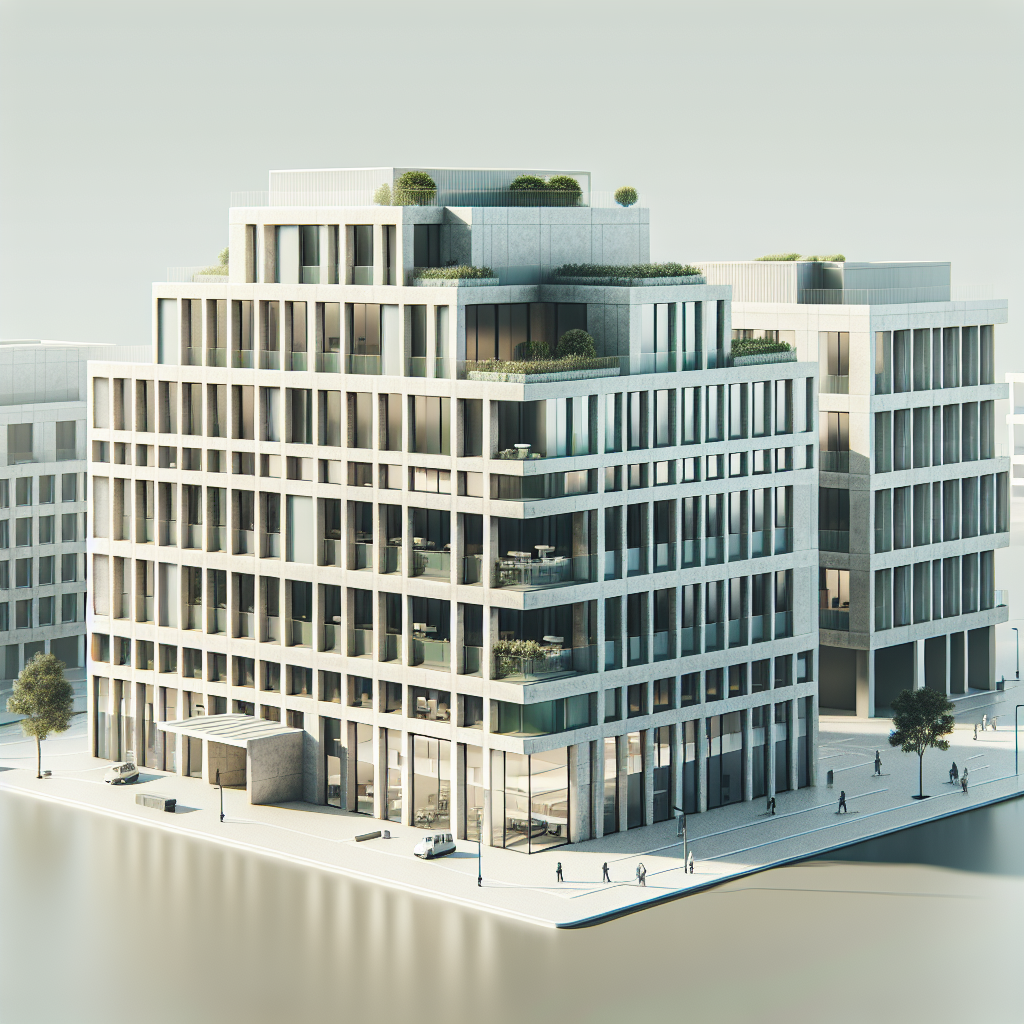
Choosing the Right Office Size for Long-Term Growth in the Basel Region
In the Basel region, office decisions are rarely just about square meters. They are closely linked to hiring plans, cost discipline, client expectations, and the ability to adapt as work patterns change. For companies considering a business location in Basel-Landschaft, Bubendorf sits in a pragmatic position: close enough to the Basel economic area to access talent and networks, while offering the operational stability and space planning options many occupiers struggle to secure in dense city centres.
Within this context, K7 Center in Bubendorf is best understood as part of a broader, professionally managed approach to commercial property in the region. It aligns with the logic currently shaping the Swiss office market: modern, flexible, well-connected space is absorbed more quickly than older, less adaptable stock, particularly where quality and ESG expectations are rising.
What the Swiss Office Market Signals About Size Planning
Office size strategy in Switzerland is increasingly influenced by two parallel developments: a gradual rise in available space overall, and a sharper differentiation between buildings that fit modern tenant requirements and those that do not.
According to JLL’s Switzerland Office Market 2025 update, available office space across the five largest markets (Zurich, Geneva, Bern, Basel and Lausanne) increased by 9% year-on-year to 995,500 m² at the end of 2024, and the average supply ratio rose from 4.1% (end of 2019) to 5.0% (end of 2024). At the same time, JLL notes that older buildings without a railway station within walking distance face leasing challenges, while “modern, flexibly usable and ideally ESG-compliant office space with good connectivity” is absorbed comparatively quickly.
For occupiers, the practical implication is straightforward: “more availability” does not automatically mean “more suitable options.” Office size decisions should therefore be made in parallel with a building-quality decision. A slightly smaller footprint in a higher-performing building can be more resilient than a larger footprint in space that cannot support hybrid working, ESG reporting expectations, or efficient reconfiguration.
Core Considerations for an Office Size Strategy
1) Start with utilisation, not headcount
Many companies still equate growth with desks. But hybrid work, project-based teams and client-facing meeting needs have shifted the logic. A better starting point is utilisation: how many people are typically present on peak days, and what types of space do they actually need when they are present?
Industry guidance often frames planning around square meters (or square feet) per employee, but the more useful takeaway is the range and the reasons behind it. A current overview of industry-based planning assumptions suggests a typical modern planning range of roughly 80–120 sq ft per employee, varying by confidentiality needs, collaboration intensity and meeting-room requirements (Eternity Consultancy, 2026 industry guide).
- Professional services often require a higher share of enclosed offices and secure rooms.
- Tech and project teams can reduce dedicated desks but need more collaboration, workshop and meeting space.
- Sales and client-facing roles benefit from call areas, small meeting rooms and flexible touchdown zones.
2) Plan for “growth without disruption”
The key risk in office sizing is not only overspending; it is disruption from frequent relocations. Relocation tends to consume leadership time and creates operational friction. A robust office size strategy therefore plans for growth in a controlled way:
- Define a stable “core footprint” (the space you can justify even under conservative growth assumptions).
- Add expansion flexibility through adjacency options, modular floor layouts, or short-term swing space.
- Protect critical functions (client meetings, confidential work, focused tasks) from being compromised as density rises.
3) Flexibility is not a trend; it is risk management
Flexibility is often presented as a cultural feature. In practice, it is a balance-sheet feature: it reduces the risk of carrying unused space during hiring pauses, reorganisations, or market changes. This is where flexible office Bubendorf solutions can complement conventional leases.
Flexible workspace models—coworking, serviced offices, and shared meeting infrastructure—provide a buffer that allows firms to keep a disciplined long-term footprint while still accommodating short-term projects and onboarding peaks. For an example of flexible workspace concepts in the region, see coworking.p201.ch.
4) The building’s adaptability matters as much as the area
When companies evaluate office space Bubendorf options, the conversation should quickly move from “How big?” to “How adaptable?” The same square meter count can feel either constrained or generous depending on ceiling heights, structural grid, meeting-room ratios, HVAC zoning, and the ease of reconfiguring partitions.
JLL’s research underlines that the market absorbs “modern, flexibly usable” space faster (JLL, 2025). In other words, adaptability is not an aesthetic preference; it is a leasing and occupancy resilience factor.
Practical Relevance for Businesses in Bubendorf and the Basel Region
For business owners and corporate tenants, office sizing becomes most concrete when translated into operating decisions. A structured approach typically addresses four questions:
- Which work happens in the office? Collaboration, client meetings, regulated work, training, innovation workshops, or focused individual tasks?
- What is the “peak day” scenario? Not average attendance—peak day drives meeting-room stress, noise levels, and user satisfaction.
- Which functions must be protected? Confidential conversations, IP work, HR topics, and executive meetings often require enclosed rooms regardless of hybrid policies.
- What is the two-step growth plan? Many firms benefit from a defined trigger (headcount, revenue, new business line) that activates expansion space.
Companies that are sensitive to recruitment and retention should also consider the office as a working tool. Workspace quality affects productivity and collaboration, but it also signals organisational maturity to candidates and partners—particularly in a competitive talent corridor like the broader Basel area.
For a view into evolving office concepts and how tenants increasingly combine different workspace types, the5thfloor.ch is a useful reference point for modern workspace trends and the shift toward experience-driven office environments.
Long-Term Value Perspective: Occupier Logic and Investor Logic
For investors and decision-makers, office size strategy connects to long-term value in two ways.
First, stable demand increasingly concentrates in assets that meet functional and sustainability expectations. JLL’s market commentary highlights that investors are likely to focus on core properties near urban centres that do not require refurbishment and “meet the required sustainability criteria” (JLL, 2025). This aligns occupier preferences with investment logic: buildings that enable efficient space use and credible ESG positioning tend to face lower vacancy risk.
Second, flexibility reduces volatility in occupancy outcomes. If tenants can right-size without leaving the building—or can add project space without renegotiating an entire lease—the probability of longer tenant relationships increases. Over time, this matters for both cashflow reliability and asset perception.
In other words, “large offices Switzerland” are not automatically a sign of strength. The more resilient approach is to secure the right amount of space in the right type of building, with pathways to expand or rebalance as the organisation evolves.
Regional Positioning: Bubendorf within Basel-Landschaft
When comparing commercial locations, the Basel city centre often appears attractive for proximity, but it can be constrained in terms of expansion options, parking ratios, and consistent access to modern floorplates. Bubendorf’s positioning within Basel-Landschaft can be advantageous for firms prioritising operational efficiency and medium-term scalability while still remaining connected to the Basel economic area.
JLL notes that in some prime Swiss submarkets, availability can be extremely limited (for example, Bern’s city centre at 0.4%); meanwhile, certain centres—such as Basel—show higher vacancy in central areas, with quality and connectivity being decisive differentiators (JLL, 2025). For occupiers, this reinforces a regional strategy: rather than focusing solely on a postal code, assess how the location supports recruitment, client access, and efficient daily operations.
For neutral comparisons of regional commercial offerings and positioning, k7bubendorf.ch and p201.ch provide helpful reference points for how different sites present their connectivity, building standards, and use cases.
How K7 Center Fits into a Professional Real Estate Context
Companies evaluating commercial property Bubendorf often also want reassurance that the asset is managed within a stable, long-term ownership and development framework. K7 Center is part of a broader real estate portfolio, which can be viewed at sitex.ch. For corporate tenants and investors alike, portfolio context matters because it typically correlates with consistent building management standards, reinvestment capacity, and long-term planning discipline.
From an occupier perspective, this can support office size strategy: a professionally managed environment is more likely to accommodate future changes—whether that is a layout adjustment, a phased expansion, or the integration of flexible workspace elements—without forcing disruptive relocations.
Conclusion: Office Size as a Long-Term Operating Decision
Choosing the right office size for long-term growth is no longer a simple calculation based on today’s headcount. In Switzerland’s evolving office market, the more durable approach combines three elements: realistic utilisation planning, flexibility that reduces cost and relocation risk, and building quality that supports modern working patterns and sustainability expectations.
In the Basel region, Bubendorf provides a rational option for organisations that value stability and scalability. Within that setting, K7 Center can be evaluated as a practical platform for right-sized occupancy: a place where office space decisions can be made with a longer time horizon, aligned with operational needs and the realities of how teams work today.