
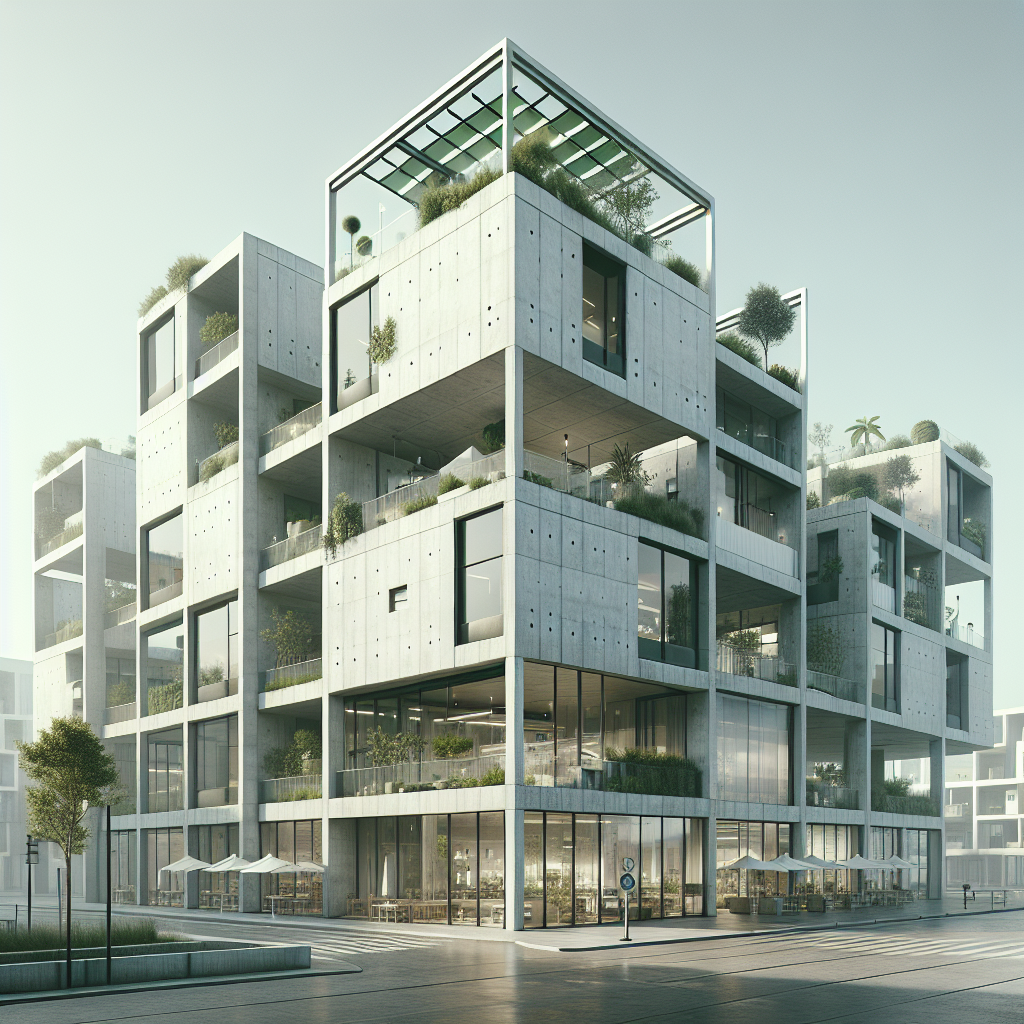
Sustainable Commercial Buildings in Switzerland: ESG and Energy Performance in Practice for the Basel Region
In Switzerland, sustainability in commercial real estate is increasingly defined by measurable energy performance, operational resilience, and long-term regulatory alignment. For occupiers, investors, and public stakeholders in the Basel region, these themes are no longer abstract: energy costs, reporting requirements, and climate-adaptation measures have become practical decision factors when evaluating commercial property Bubendorf and the broader business location Basel region.
K7 Center in Bubendorf sits within a productive corridor between Basel and the upper Basel-Landschaft economic areas. The site is positioned to serve regional employers seeking reliable connectivity and a building approach that can meet modern expectations for resource efficiency. Within the broader portfolio context of sitex.ch, K7 can be understood as part of a regional strategy: professional space for operations that value performance, predictable operating costs, and long-term asset stability.
Why “Sustainable Office Building Switzerland” Has Become a Commercial Requirement
Sustainability in Swiss offices increasingly merges three concerns: (1) decarbonisation and renewable electricity, (2) climate adaptation and summer comfort, and (3) governance—i.e., transparency, planning security, and proof of performance. These are directly relevant to leasing decisions and to asset valuation.
Switzerland’s energy policy direction continues to support renewables and efficiency through the federal Energy Strategy 2050, which is frequently referenced as the long-term framework for electrification and renewable supply. In parallel, the commercial market is responding to regulatory and economic signals that make on-site generation and efficient systems more attractive over the life of a building.
Rooftop solar: a measurable lever for ESG and operating cost resilience
One of the clearest indicators of practical sustainability is photovoltaic (PV) deployment. A 2025 analysis of commercial and industrial rooftops mapped 63,890 Swiss C&I rooftops, estimating 12 GW total solar potential; with current adoption at 22.2%, around 7.7 GW remains untapped (Planno: Commercial Rooftop Solar Potential in Switzerland). This matters to office users because PV is not a “nice-to-have”; it is one of the few building interventions that directly links ESG performance to energy-cost predictability.
The same dataset highlights a regional dynamic relevant for the Basel area: Northwestern Switzerland shows adoption at 18.9%, below the national average, suggesting remaining development headroom (Planno). For decision-makers evaluating office space Bubendorf, this context supports a rational question: does the building and site strategy align with the direction of travel—more on-site generation, better load management, and more transparent energy performance?
Building design for hotter summers: energy performance is also comfort performance
Energy performance is increasingly tied to summer comfort and productivity. Swiss utilities and energy partners are openly addressing the shift: EWZ notes that summer heat is rising and that office buildings can become increasingly cooling-dominated if not planned carefully (EWZ: Climate-conscious building). Their guidance is practical: building orientation, façade and glazing ratios, shading, and night-time ventilation strategies can reduce reliance on mechanical cooling—thereby stabilising operating costs and avoiding peak-load risks.
From a tenant perspective, this is not merely technical. It affects:
- Workplace quality (thermal comfort, daylight without overheating)
- Operational expenditure (cooling energy and maintenance)
- Business continuity (heatwaves and grid stress events)
From Photovoltaic Commercial Systems to Integrated Energy Concepts
The most credible sustainability strategies in Swiss commercial real estate are integrated: PV, efficient heating and cooling, and planning approaches that consider the whole site. EWZ explicitly recommends involving energy service providers early to identify cross-site solutions and combine locally available energy sources—from photovoltaics to cooling, heat supply, and e-mobility readiness (EWZ).
At the frontier end, Switzerland also provides concrete examples of high self-sufficiency. A European case study of buildings in Männedorf describes a system combining photovoltaics, storage, and intelligent energy management, reporting renewable energy production of 100% and detailing building-integrated PV façade approaches (BUILD UP: Fully self-sufficient buildings in Männedorf). While an office property may not aim for full self-sufficiency, the underlying lesson is relevant: the Swiss market is technically capable of moving beyond compliance into operational resilience.
For a sustainable office Switzerland discussion, the key is not whether every building becomes “energy positive,” but whether it is designed and operated to remain competitive under evolving energy prices, reporting expectations, and climate conditions.
Practical Relevance for Businesses Seeking Office Space in Bubendorf
When business owners and corporate tenants assess flexible office Bubendorf or larger occupier solutions, sustainability should be translated into concrete selection criteria. Typical questions include:
- What drives operating costs? Heating/cooling strategy, insulation, control systems, and the ability to incorporate PV or procure renewable electricity efficiently.
- How stable is comfort over time? Overheating risk, shading, ventilation concept, and the building’s ability to cope with hotter summers without excessive mechanical cooling.
- Can the space adapt? Flexibility in fit-out, splitability, and the potential to adjust layouts as headcount and processes change.
In Bubendorf, this intersects with a broader trend: occupiers increasingly mix conventional leased space with flexible solutions for project teams, satellite functions, or growth phases. In that context, it is useful to distinguish between a stable base location and complementary flexibility. For example, flexible workspace concepts and services are visible in the regional market through platforms such as coworking.p201.ch, which reflect how demand is shifting toward short-term scalability alongside long-term leases.
Modern workplace expectations also extend beyond square metres. Office concepts continue to evolve toward activity-based environments, higher-quality shared areas, and hospitality-informed planning. As an example of these changing expectations, the5thfloor.ch illustrates how operators and landlords are experimenting with contemporary formats that respond to new user behaviours.
Long-Term Value Perspective: Why ESG Performance Supports Asset Stability
For investors and regional decision-makers, sustainability is increasingly connected to valuation stability. The logic is straightforward: buildings with lower and better-managed energy demand, credible decarbonisation pathways, and climate-adaptation measures are less exposed to future cost shocks and obsolescence risks.
PV readiness and deployment can be evaluated objectively. The national picture—12 GW potential and 7.7 GW still untapped—implies that PV adoption is likely to continue to increase as economics and regulation converge (Planno). For a property investor, that trend translates into two practical implications:
- Assets without a clear energy roadmap may face a “performance discount” as tenants and financiers compare operating costs and ESG disclosures.
- Well-positioned assets can preserve liquidity by aligning with expected technical standards (efficient systems, PV potential, measured performance).
EWZ further points to the advantage of planning security and cost transparency when energy solutions are integrated early in a project (EWZ). In commercial real estate, this is a meaningful value driver: predictable capex and opex trajectories reduce uncertainty and support long-hold strategies.
Regional Positioning in Basel-Landschaft: Bubendorf as a Business Location
Bubendorf benefits from its role inside Basel-Landschaft’s diversified economic fabric—close enough to Basel’s corporate ecosystem to be relevant, while offering a more operationally efficient setting for many functions. For occupiers, this can mean access to the regional labour market without accepting the constraints that can come with denser urban cores.
From the solar-adoption perspective, Northwestern Switzerland’s below-average PV penetration (18.9% adoption in Planno’s analysis) suggests that the region remains in an earlier phase of rooftop solar rollout compared with higher-adoption areas (Planno). For public stakeholders, this can be read as an opportunity to modernise the building stock and improve local energy resilience. For private stakeholders, it is a reminder that sustainability-led upgrades may still differentiate assets in this geography.
When comparing commercial locations and building propositions, decision-makers often consult project-specific references and comparable sites. In this context, k7bubendorf.ch and p201.ch can be used as neutral points of comparison for how business parks and commercial properties position themselves in terms of accessibility, building standards, and workspace offering across the region.
Conclusion: Sustainability as a Decision Framework, Not a Label
In Swiss commercial real estate, sustainability is increasingly best understood as a decision framework grounded in performance and risk management. Evidence points to significant remaining potential for photovoltaic commercial installations—12 GW total potential with 7.7 GW still untapped—and to regional differences that matter for Northwestern Switzerland (Planno). At the same time, climate-adaptive planning is becoming central to maintaining comfort and controlling cooling-related operating costs over the building life cycle (EWZ).
For businesses assessing office space Bubendorf and commercial property Bubendorf, and for investors evaluating long-term value in the business location Basel region, the practical question is consistent: does the building enable efficient operation today while remaining aligned with the next decades of energy, climate, and reporting realities? Properties that can answer that question with transparent, verifiable performance are more likely to remain competitive—regardless of short-term market cycles.